Rules and ethics
Part of Small business rates relief: eligibility check for England
Small business rates relief: eligibility check for England
Small business rate relief in England gives 100% relief up to £12,000 of rateable value, then tapers to £15,000. Check the bands and how to claim from your council.
What to take away
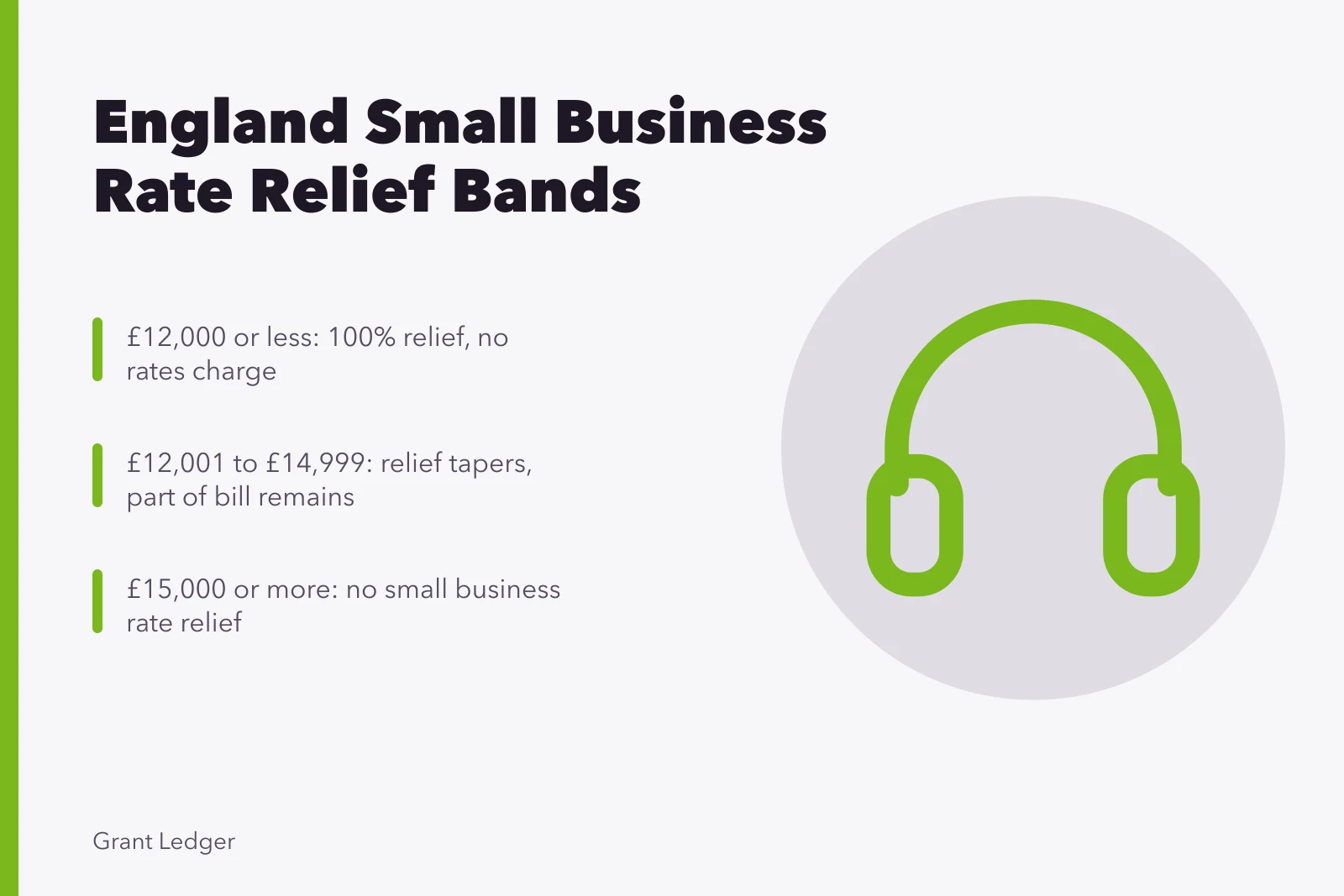
- In England, a property with a rateable value of £12,000 or less can receive 100% small business rate relief.
- Relief tapers between £12,001 and £15,000, then stops above £15,000.
- Your local council awards the relief, and HMRC has no part in it.
- A second property normally ends the relief unless each other property is below £2,900 and the total is under £20,000.
- The Valuation Office Agency sets rateable value, which drives everything else.
Why this covers England only
Business rates are devolved. Scotland runs the Small Business Bonus Scheme and Wales sets its own reliefs. A rateable value that produces a nil bill in one nation can leave a bill in another.
The Wikipedia article on rates across the United Kingdom sets out the shared framework and where the four nations diverge.
The England rateable value bands
The GOV.UK page on small business rate relief gives the England figures: 100% relief at a rateable value of £12,000 or less, tapering to nothing at £15,000. Those thresholds have not moved since April 2017.
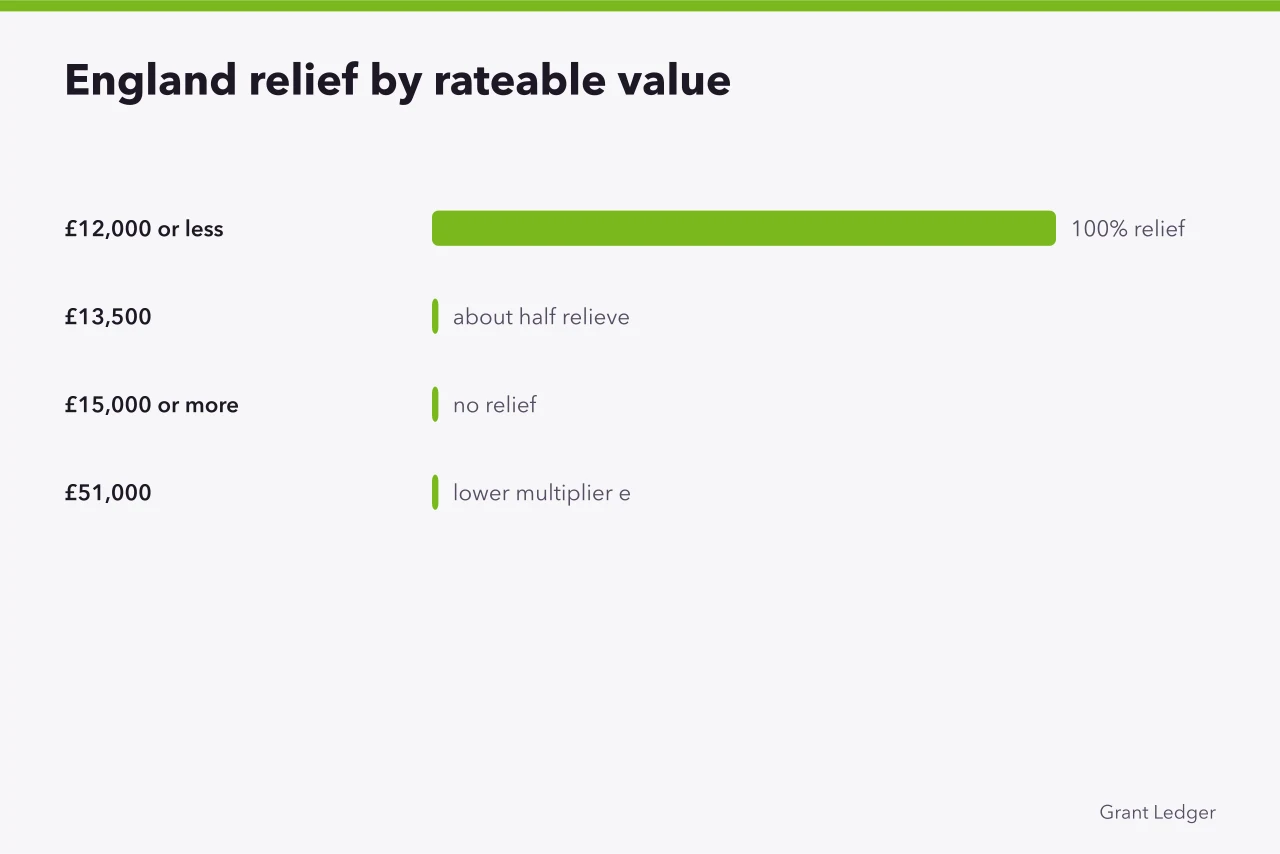
Between £12,001 and £14,999 you keep part of the relief, on a sliding scale. At a rateable value of £13,500, about half the rates charge is relieved. Your council calculates the figure, but it should appear on the bill.
England also uses a lower small business multiplier for properties with a rateable value below £51,000. The multiplier is the pence in the pound figure applied to rateable value, and your bill should show which one was used.
Rateable value bands at a glance
| Rateable value in England | Small business rate relief |
|---|---|
| £12,000 or less | 100% relief, so no rates charge on the bill |
| £12,001 to £14,999 | Relief tapers, so part of the bill remains |
| £15,000 or more | None |
| Additional property below £2,900, total below £20,000 | Relief kept |
| Additional property above either limit | Relief lost |
Two or more properties
GOV.UK sets the multi-property test: to keep the relief, every additional property must have a rateable value below £2,900, and the total rateable value of all your properties must be under £20,000.
Other reliefs, from rural rate relief to retail discounts, are listed under types of business rates relief.
How to claim, step by step
There is no central application form for England, so each council runs its own process.
- Find the rateable value for each property you occupy, on the bill or through the VOA.
- Check the £12,000 and £15,000 bands, then the multi-property test.
- Ask the council that issues the bill for any relief that is missing.
- Keep evidence of occupation, including lease dates and other property you hold.
- Check the revised bill for the relief line and the multiplier applied.
If the rateable value looks wrong
The Valuation Office Agency, not the council, sets rateable value. The next revaluation in England takes effect on 1 April 2026, using values from April 2024.
If the figure looks wrong, use the VOA's check and challenge process rather than arguing with the council. A wrong rateable value changes the relief you can claim.
What relief does not do
Small business rate relief reduces a bill, so its value equals the rates you would otherwise have paid. It cannot fund a fit-out, stock or a first hire.
If you need money rather than a discount, comparing start up loans with business grants is the more useful exercise before you commit to either.
Other occupancy costs worth checking
Rates are rarely the only fixed cost attached to a property. Energy, waste collection and service charges sit alongside them, and each carries its own eligibility rules, deadlines and evidence requirements, most of which sit with the council or the supplier rather than a central body.
A council, a supplier or a funding body is usually the gatekeeper. That makes eligibility checking a routine task rather than a one-off exercise, and the paperwork looks similar each time.
A rates bill and an energy bill reward the same behaviour: knowing your figures and keeping records. Meter readings, floor areas and occupancy dates are the evidence most schemes ask for.
Checking eligibility for energy efficiency grants follows the same steps as the relief: find the current rules, test your figures against them, then apply with evidence.
Common questions
Does the relief apply automatically?
Some councils apply it without a claim, and many do not. Check the relief line on the bill and ask your council in writing if it is missing.
Do I lose relief if I work from a serviced office?
Relief attaches to the rated property, not to you. If a landlord or operator is rated for the space, the relief is theirs to claim, and rates may be recharged through your fee.
What is the difference between the relief and the small business multiplier?
The multiplier is the pence in the pound rate applied to rateable value. Relief then reduces the bill calculated at that multiplier.