Rules and ethics
Part of A guide to video games tax relief for small studios
A guide to video games tax relief for small studios
VGTR helps small UK games studios cut corporation tax on qualifying games. Check BFI cultural test points, UK expenditure rules and HMRC claim steps.
What to take away
- Video Games Tax Relief (VGTR) is a corporation tax relief for companies that develop qualifying video games, not a cash grant.
- A game needs BFI certification through the cultural test, which currently requires 18 of 35 points.
- At least 25% of core expenditure must be UK expenditure, according to HMRC guidance (accessed May 2026).
- Claims run through the company tax return, so keep production and cost records from day one.
- VGTR has been succeeded by the Video Games Expenditure Credit for newer productions, so check which rules apply to your accounting period.
How VGTR differs from a grant or R&D relief
VGTR is not money from a grant programme. It reduces corporation tax for a qualifying company, or creates a payable credit if the company has a surrenderable loss. A sole trader or partnership cannot claim it.
The relief is separate from R&D tax relief, which rewards technical uncertainty in development. A studio may be able to claim both, but the tests and qualifying costs differ. The GOV.UK R&D relief rules explain which companies can claim.
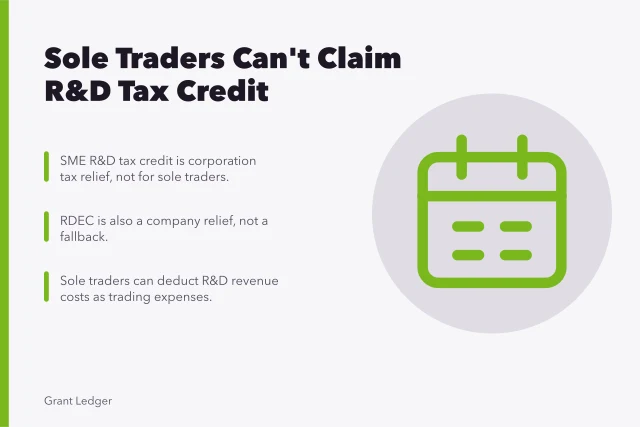
If you trade as a sole trader, VGTR is unavailable because it sits in the corporation tax system. Our guide to sole trader R&D tax relief explains why trading status changes what you can claim.
VGTR is not a grant. If you need upfront cash, the finance and support finder lists grants, loans and other schemes.
The BFI cultural test in plain English
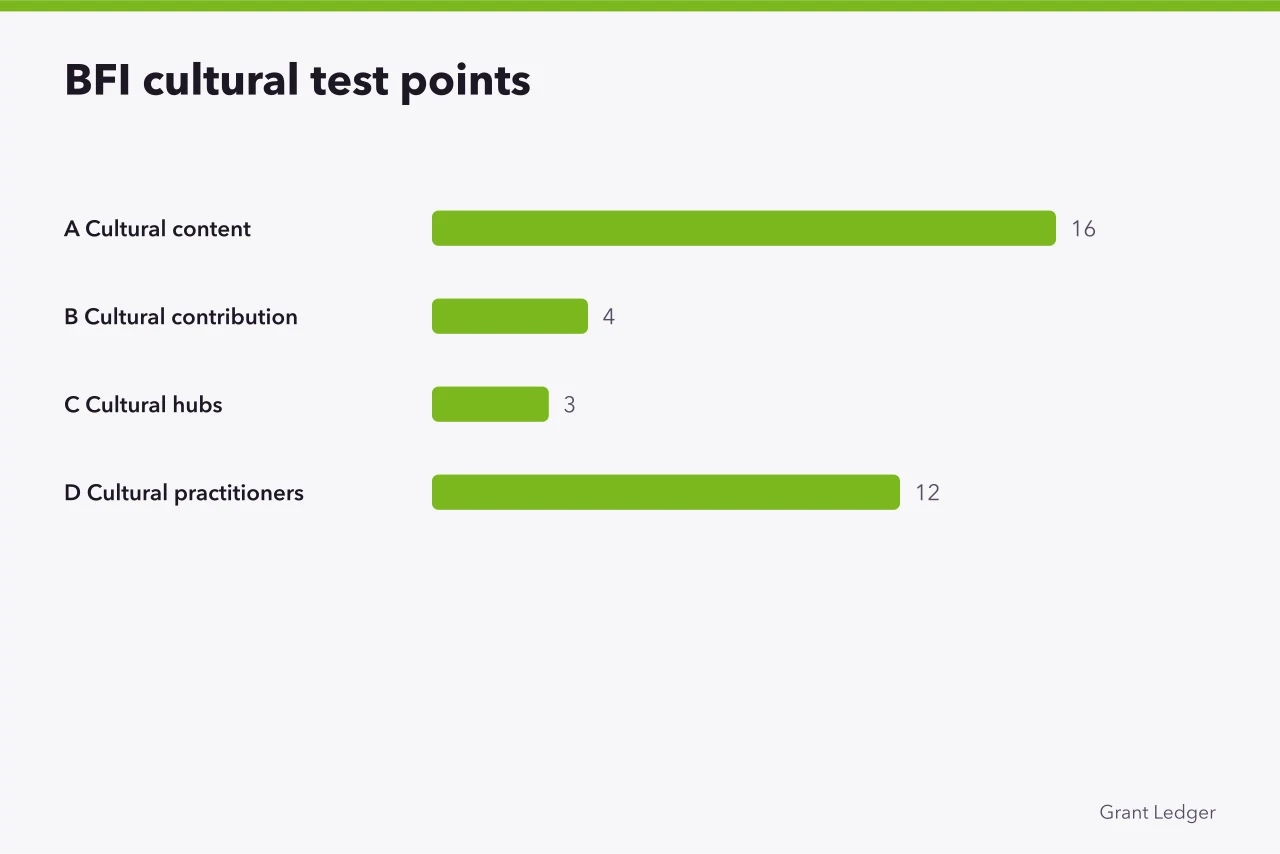
The BFI certifies whether a game is culturally British. Its current video games cultural test awards up to 35 points and sets the pass mark at 18, according to BFI guidance (accessed May 2026).
Show the numbers
| A Cultural content | 16 |
|---|---|
| B Cultural contribution | 4 |
| C Cultural hubs | 3 |
| D Cultural practitioners | 12 |
Points are not a quality score. A small studio can pass by placing the game in a UK setting, using UK talent, and doing core work in the UK. Weak evidence in one section can be offset by strength in another, provided the total reaches the pass mark.
UK expenditure rules for core costs
HMRC's VGTR guidance (accessed May 2026) requires at least 25% of core expenditure to be UK expenditure. Core expenditure means costs of designing, producing and testing the game. It does not include marketing, distribution or financing.
UK expenditure is money spent on goods or services supplied from the UK. If you use overseas contractors for art or code, that spending may count as non-UK core expenditure. Track each invoice by supplier location and activity.
If a supplier is based in the UK but delivers work from overseas, the place of supply can be disputed. Keep contracts and timesheets that show where the work happened.
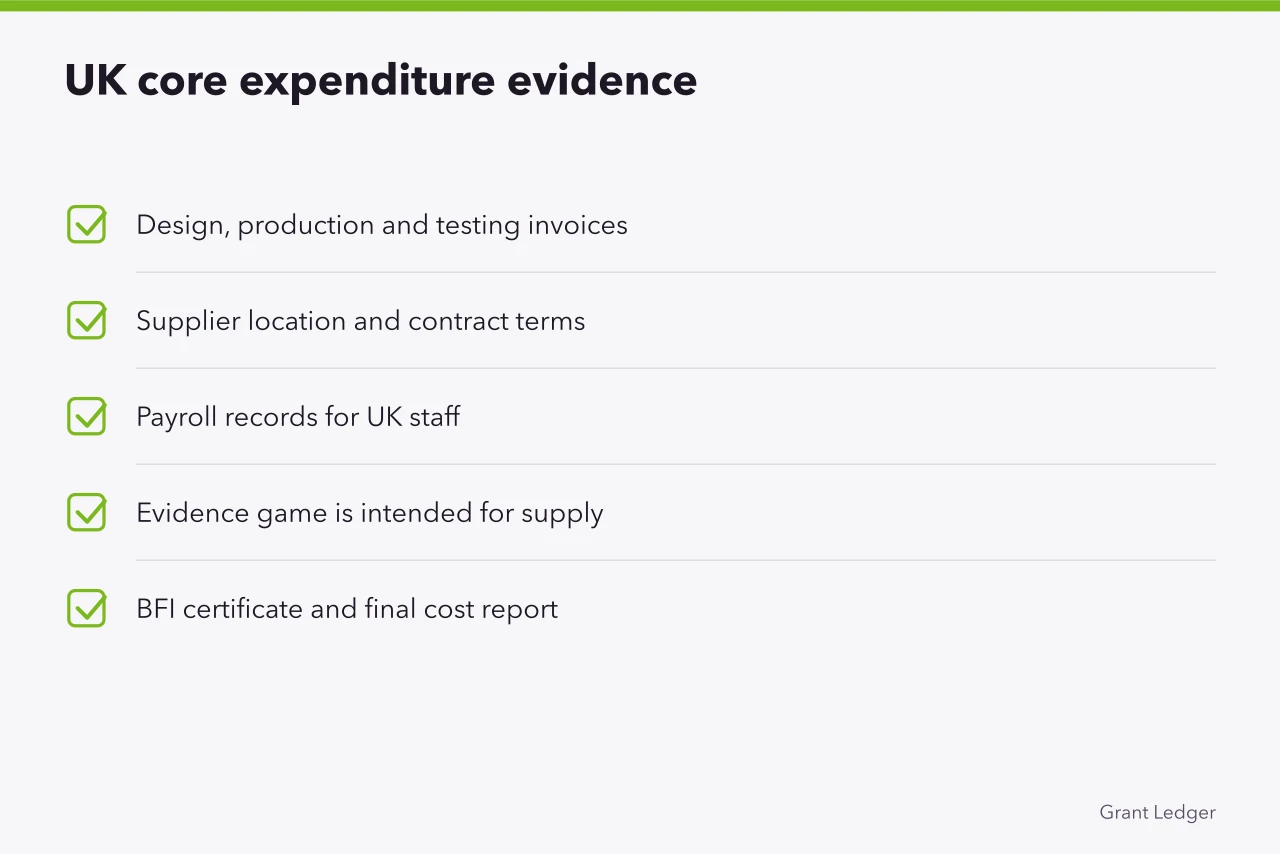
- Design, production and testing invoices
- Supplier location and contract terms
- Payroll records for UK staff
- Evidence that the game is intended for supply
- BFI certificate and final cost report
Claiming through HMRC
- Check the game began production in a period that still qualifies for VGTR, or that you can claim the successor expenditure credit.
- Apply to the BFI for cultural test certification before or alongside the claim.
- Calculate core expenditure and separate UK from non-UK costs.
- Include the claim in the company tax return, with the BFI certificate and schedules.
- Keep records for HMRC and the BFI for the statutory retention period.
The relief is statutory rather than discretionary. Primary legislation sets the framework for tax reliefs, as with the Income Tax Act 2007, and HMRC applies the rules to the facts.
Cash arrives after the accounting period, so plan working capital. Our grant budget that starts with the funding gap shows how to map costs against money that arrives late. This is general guidance only. Individual cases need a qualified adviser.
Common questions
Does a small studio need to be a company?
Yes. VGTR is a corporation tax relief, so the claimant must be a company within the charge to UK corporation tax. Sole traders and partnerships cannot claim it.
How much UK expenditure is enough for VGTR?
HMRC guidance (accessed May 2026) sets the minimum at 25% of core expenditure. It is not a target, and HMRC will test the figures against your records.
Can a studio claim VGTR and R&D relief together?
It may be possible, but the two reliefs cover different costs and tests. Speak to a qualified adviser before submitting both claims in the same return.
What records matter most?
Keep the BFI certificate, production budget, supplier invoices, payroll records and a clear audit trail between costs and the game. HMRC can ask for evidence years later.