Rules and ethics
Part of Do small employers get Employment Allowance in the UK?
Do small employers get Employment Allowance in the UK?
Employment Allowance cuts employer National Insurance by up to £10,500 in 2025 to 2026, but single-director companies and group employers face limits.
What to take away
- Employment Allowance cuts your employer National Insurance bill by up to £10,500 in the 2025 to 2026 tax year, according to GOV.UK guidance updated in April 2025.
- Most small limited companies qualify, but a company whose only employee paid above the secondary threshold is a director cannot claim.
- Only one claim is allowed across a connected group, and relief is capped at the employer contributions you actually owe.
- Small business rate relief and R&D relief are separate claims with their own tests, and neither replaces the allowance.
Employment Allowance is an offset, not a grant
Class 1 secondary contributions are the employer's share of National Insurance, charged on top of wages. Employment Allowance reduces that bill instead of paying you cash. Take a company with employer contributions of £3,000 for the year: the allowance is worth £3,000 and no more. It does not touch the National Insurance deducted from your employees' pay, and it cannot reduce their income tax.
Who can claim: the four tests
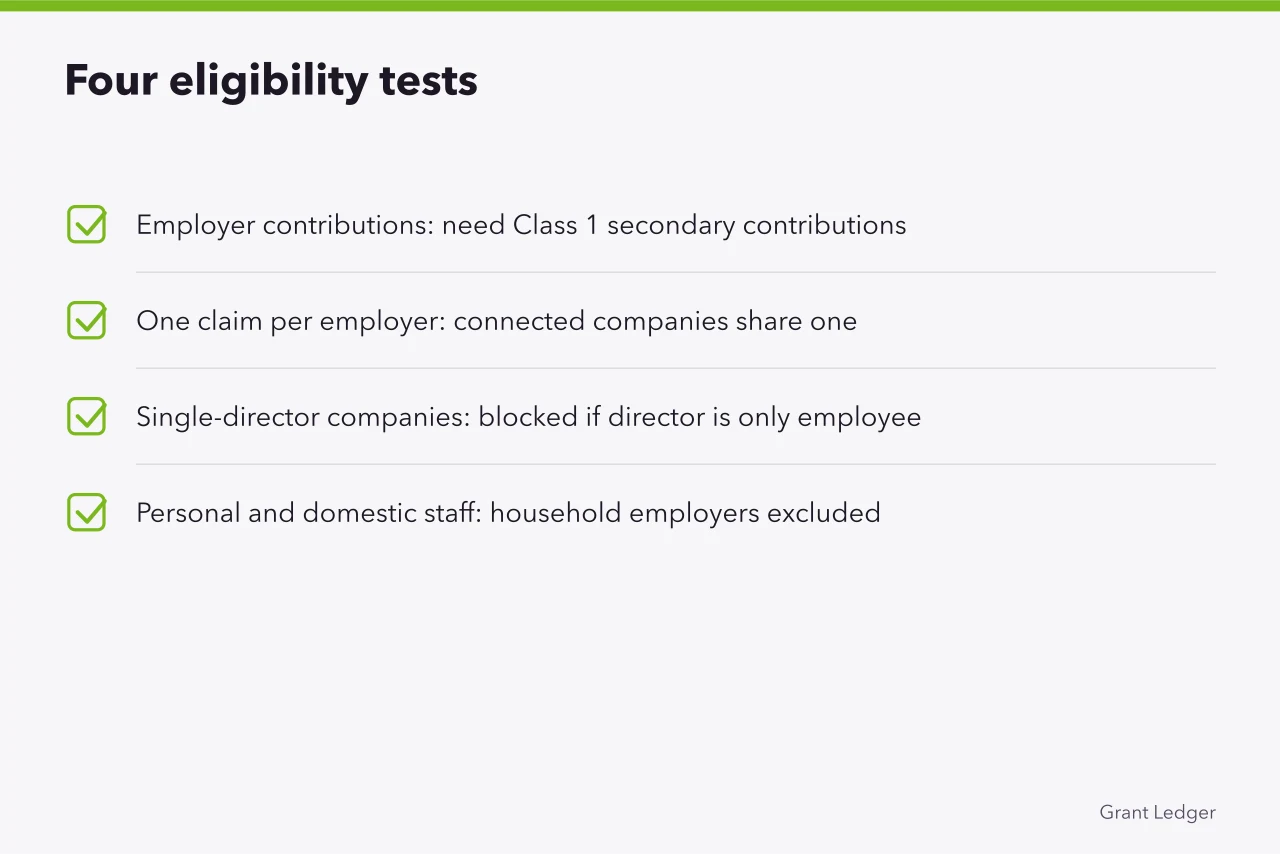
HMRC's tests are short, but two of them trip up small companies.
| Test | What it means for a small employer |
|---|---|
| Employer contributions | You need Class 1 secondary contributions to reduce; relief stops at your actual bill |
| One claim per employer | Connected companies can make only one claim between them |
| Single-director companies | Blocked where the only employee above the secondary threshold is a director |
| Personal and domestic staff | Household employers are excluded, with narrow exceptions for care workers and personal assistants |
The secondary threshold for 2025 to 2026 is £5,000 a year for each employee, under the same guidance.
The single-director trap for limited companies
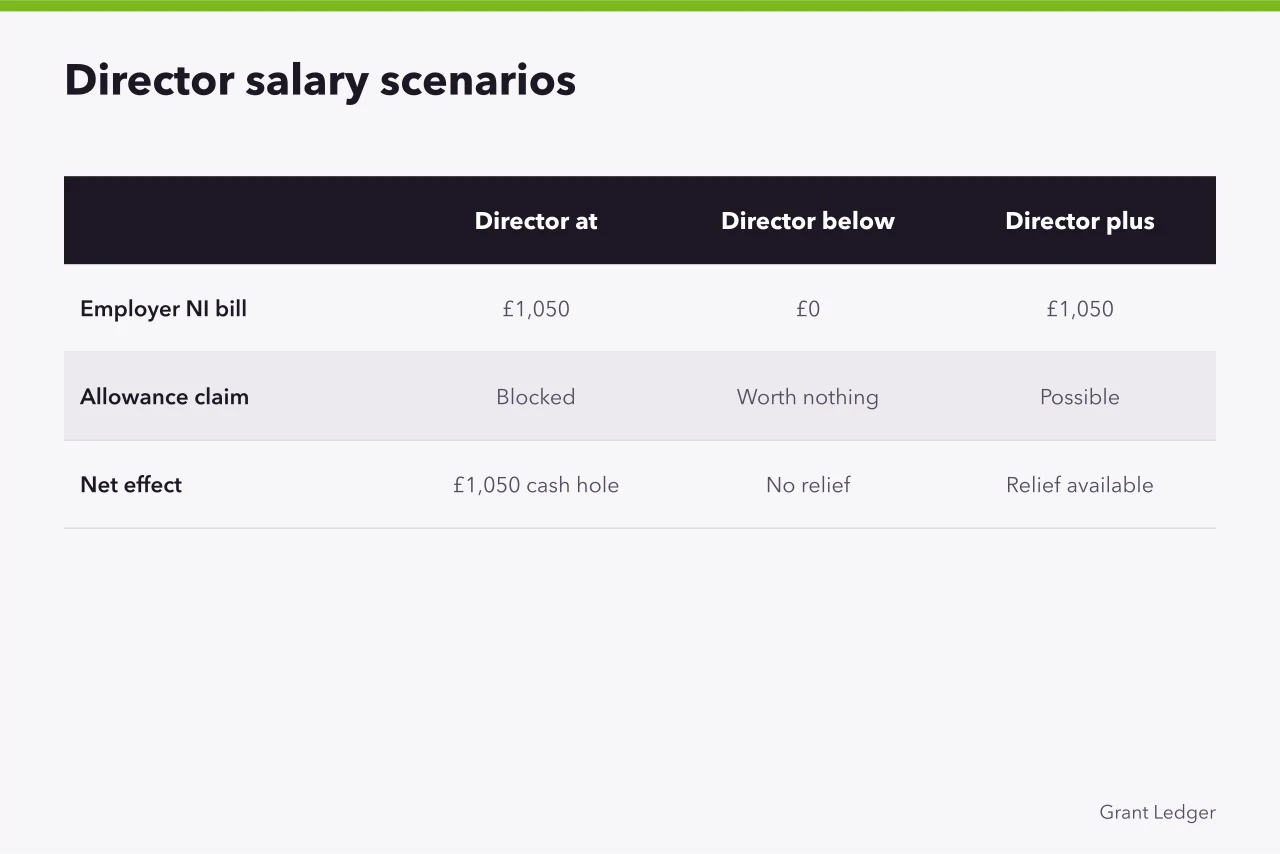
A one-person company paying its director £12,000 a year owes employer National Insurance of £1,050. That is £12,000 less the £5,000 secondary threshold, charged at the 15% employer rate HMRC set for 2025 to 2026. Because the director is the only employee paid above the threshold, the claim is blocked and the company pays the £1,050 in full. Cut the salary below £5,000 and there is no employer bill to reduce, so the allowance is worth nothing in that year. Add a second employee on £12,000 and a claim becomes possible. A blocked claim lands as a cash hole, the sort of downside our guide to stress-testing a funding plan against rejection and delay sets out.
Subsidy limits, groups and de minimis aid
Subsidy rules are the part most summaries leave out. Since the Subsidy Control Act 2022 replaced the EU state aid regime, small amounts of public support can still add up across grants, rate reliefs and other awards. If your business has taken other public funding, check whether the allowance counts towards a de minimis or minimal financial assistance limit. Also check the position of every company in the group before you rely on the full £10,500.
How to claim through payroll
- Confirm you are eligible and check that no connected company has already claimed for the tax year.
- Switch on the Employment Allowance indicator in your payroll software before your first payday, or as soon as you can.
- Send an Employer Payment Summary reporting the claim if your software does not do it for you.
- Pay HMRC the reduced amount each month and keep the payroll records that show how the relief was worked out. Funded projects need the same standard of evidence, as our guide to running a funded project with evidence for every claim explains.
Other reliefs that sit alongside the allowance
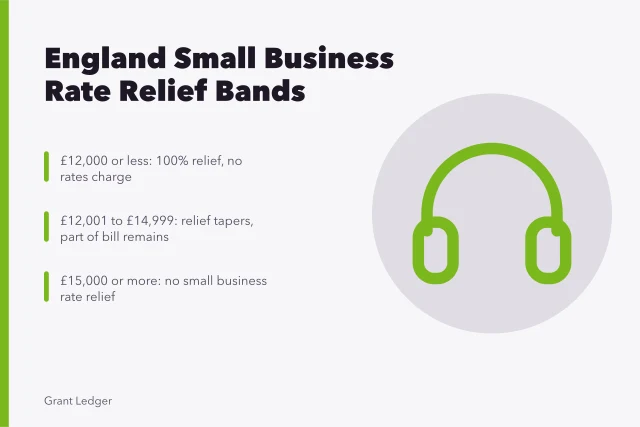
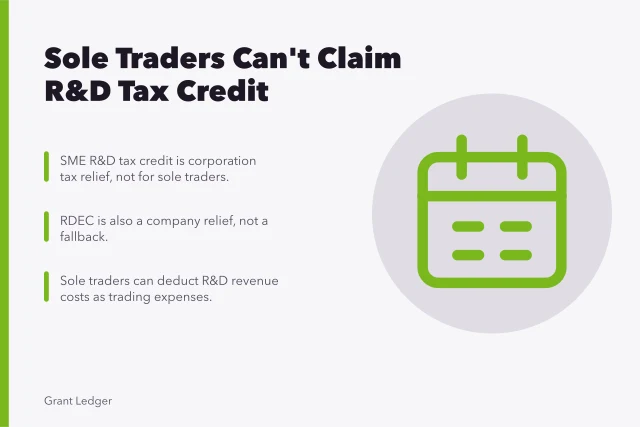
Employment Allowance is not the only support a small employer can hold. Small business rate relief is claimed from your local council and reduces the rates bill on a single property, with eligibility set out in GOV.UK's small business rate relief guidance. Research and development relief is a corporation tax claim with its own qualifying tests, described in GOV.UK's R&D relief guidance. Once the allowance is running, GOV.UK's finance and support finder is worth a scan for schemes that fit your sector.
Common questions
Can a sole director claim Employment Allowance?
Not if the director is the only person paid above the secondary threshold. A company in that position pays employer National Insurance with no offset. If anyone else on the payroll is paid above the threshold, the claim is normally available.
Does a sole trader get Employment Allowance?
Yes, if the business employs staff and owes Class 1 secondary contributions. The allowance follows the employer, not the business structure, so an unincorporated business with employees can claim it in the same way as a company.
Is Employment Allowance paid as cash?
No. It reduces the employer National Insurance you pay through payroll, so the benefit cannot exceed the contributions you owe for the year.
How much is Employment Allowance in 2025 to 2026?
£10,500 for the tax year, per GOV.UK guidance updated in April 2025. It rose from £5,000, and the rule that excluded employers with a National Insurance bill above £100,000 was removed at the same time.