Strategy
Video games tax relief vs Employment Allowance for small UK studios
Compare Video Games Tax Relief and Employment Allowance for small UK studios. See which HMRC relief cuts costs first, how they interact, and how to sequence claims.
What to take away
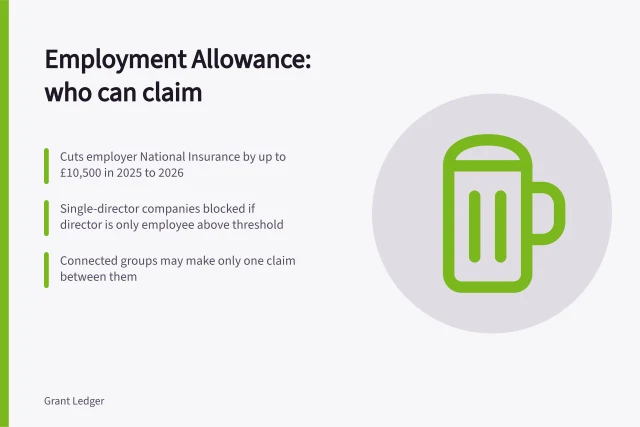
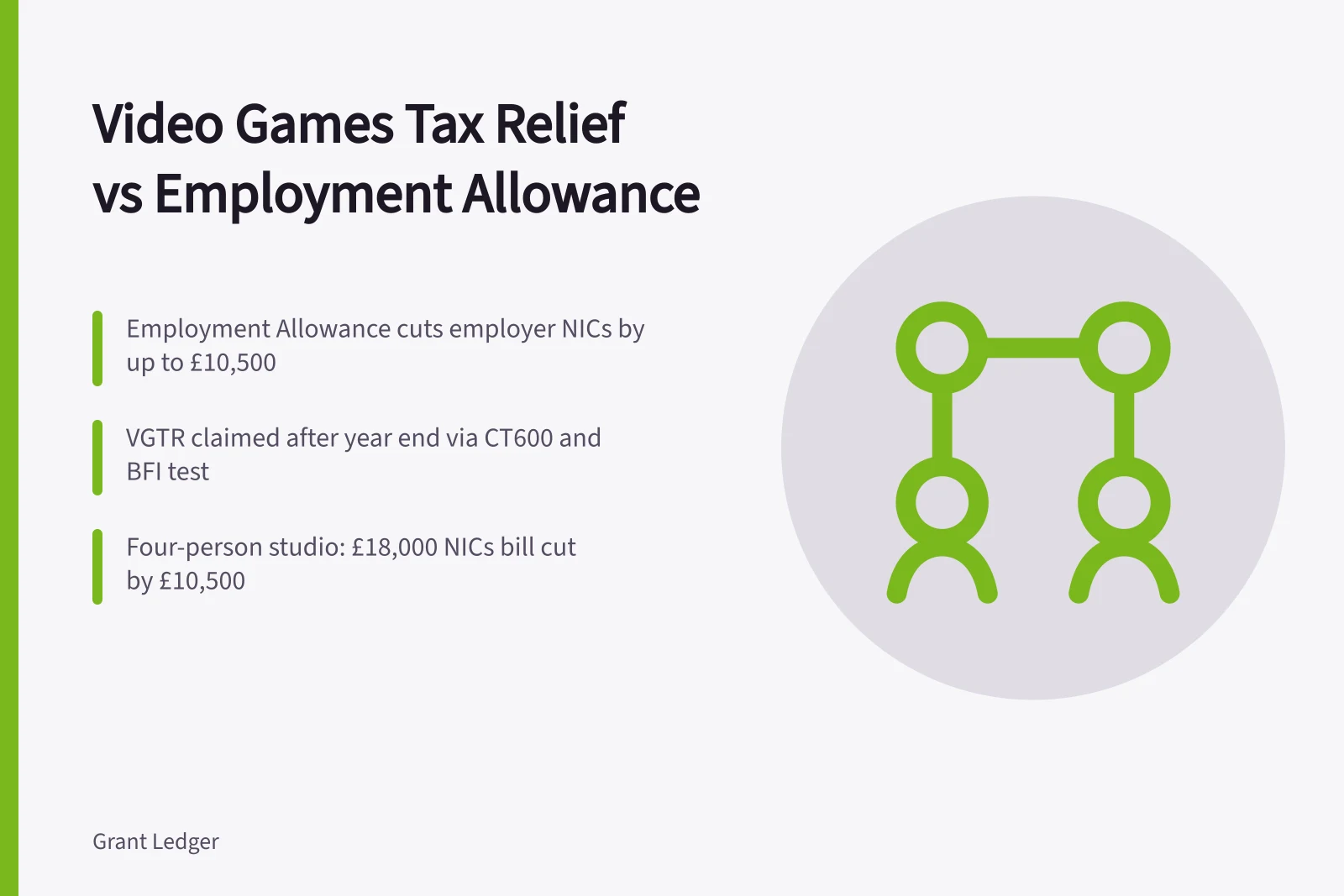
- Employment Allowance reduces employer National Insurance by up to £10,500 in 2025 to 2026, giving immediate payroll savings.
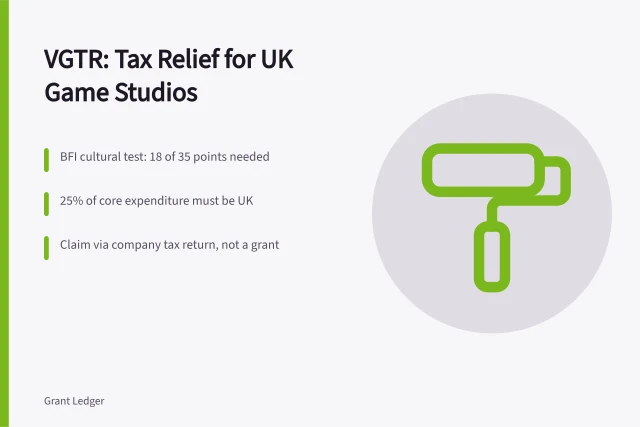
- Video Games Tax Relief (VGTR) cuts corporation tax on qualifying games, but only after BFI cultural test and UK expenditure rules are met.
- A small studio can claim both reliefs, but sequencing matters: Employment Allowance improves monthly cash flow while VGTR is typically claimed after year end.
- Single-director companies often cannot claim Employment Allowance, so VGTR may be the main option for them.
- Use each relief's own claim routePAYE for Employment Allowance, CT600 for VGTR.
How each relief works
Employment Allowance is a reduction of employer Class 1 National Insurance contributions. For 2025 to 2026, eligible employers can cut their annual employer NICs by up to £10,500. The allowance is claimed through PAYE. But some companies are excluded, including those with a single director who is the only employee paid above the secondary threshold. Groups of companies also face limits. To check whether your studio qualifies, see Employment Allowance small employer.
Employment Allowance vs VGTR
Employment Allowance
- Tax
- Employer NICs
- Claimed via
- PAYE
- Max value
- £10,500
- Qualification
- Employer NICs
- Exclusions
- Single director
Video Games Tax Relief
- Tax
- Corporation Tax
- Claimed via
- CT600
- Max value
- Not stated
- Qualification
- BFI test + UK spend
- Exclusions
- Not stated
Video Games Tax Relief is a creative industry tax relief. It reduces corporation tax on qualifying video game development. To qualify, a game must pass the BFI cultural test and meet UK expenditure rules. The studio must be a company liable to Corporation Tax. Claims go on the CT600. For a full walkthrough, read Video Games Tax Relief eligibility.
Which relief cuts costs first
Employment Allowance hits your payroll costs every month. It reduces the employer NICs you pay to HMRC through your PAYE bill. That is cash you keep immediately. VGTR, by contrast, is a corporation tax relief. You usually claim it after the end of your accounting period, although interim claims are possible for large budgets. So for day to day costs, Employment Allowance comes first.
When each relief pays
- Monthly payrollEmployment Allowance cuts NICs
- Next payroll runEmployment Allowance starts
- After accounting periodVGTR claimed on CT600
- Loss-makingVGTR payable tax credit
For a loss-making studio, VGTR can be claimed as a payable tax credit. That means HMRC pays you cash even if you have no corporation tax liability. But the claim still takes time. Employment Allowance, if you qualify, works from your next payroll run.
Example: a four-person studio
Assume a studio with four employees, each paid £35,000. The employer NICs bill is around £18,000 per year. Employment Allowance cuts that by up to £10,500. The studio also develops a qualifying game with UK expenditure of £500,000. After passing the BFI cultural test, it claims VGTR on its CT600. The VGTR reduces its corporation tax bill, or produces a payable credit if the studio is loss-making. Both reliefs can apply in the same year.
A common mistake is to assume VGTR replaces payroll relief. It does not. They operate on different taxes.
Sequencing claims through the year
- Check Employment Allowance eligibility before your first payroll run of the tax year. Claim it through your payroll software.
- Track UK expenditure on each game from the start of development. Keep evidence for the BFI cultural test.
- At year end, prepare the VGTR claim with your corporation tax return. Use the CT600 and the supplementary pages.
- If you are loss-making, elect for the payable tax credit instead of carrying the loss forward.
- Review other reliefs, such as R&D tax relief for companies liable to Corporation Tax, via HMRC guidance on R&D relief.
Also consider business rates relief for your studio premises. Small Business Rates Relief in England can cut your rates bill if your property's rateable value is below £15,000. You can apply through your local council; see small business rate relief guidance. For grant funding, Innovate UK Smart Grants support game development technology; see Innovate UK.
Common questions
Can I claim Employment Allowance and VGTR in the same year?
Yes, Employment Allowance reduces employer NICs while VGTR reduces corporation tax. They are separate reliefs with separate claim routes. A company can benefit from both if it meets each set of rules.
Does VGTR affect my Employment Allowance?
No. VGTR is a corporation tax relief, while Employment Allowance is a PAYE relief. They are calculated independently.
What if my studio is a single-director company?
Many single-director companies cannot claim Employment Allowance because they have no other employees paid above the secondary threshold. In that case, VGTR may be your main tax relief. Check the exclusion rules carefully.
Which relief should I claim first?
Claim Employment Allowance as soon as you run payroll. Then prepare your VGTR claim after the accounting period ends. That sequencing keeps monthly costs down while you wait for the annual corporation tax relief.